

Budget 2025: Income and inheritance tax increases pass first parliamentary stage
MPs have agreed the Budget resolutions following four days of debate. The freezing of income tax thresholds, inheritance tax changes and the overall tax burden were amongst the most discussed topics. Voting saw a small rebellion on the IHT reforms.
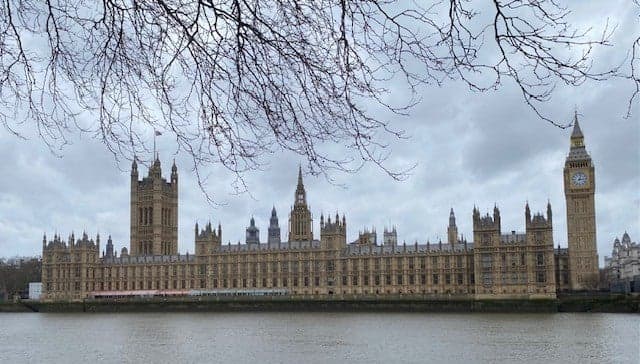
101 Budget resolutions were agreed, containing measures which will appear in the Finance Bill. Five were pressed to a vote:
- Resolution 4: Income tax (dividend rates), passed 371-166, supported by Green and Plaid Cymru MPs as well as Labour; opposed by Conservatives, Lib Dems, Reform UK and DUP
- Resolution 5: Income tax (savings rates for future years), passed 369-166, supported by Green and Plaid Cymru MPs as well as Labour; opposed by Conservatives, Lib Dems, Reform UK and DUP
- Resolution 9: Basic rate limit and personal allowance for tax years 2028-29 to 2030-31, passed 348-176, supported by Labour MPs; opposed by Conservatives, Lib Dems, Reform UK, Green, Plaid Cymru and DUP
- Resolution 28: Capital gains tax (employee-ownership trusts), passed 362-164, supported by Green MPs as well as Labour; opposed by Conservatives, Lib Dems, Reform UK and DUP
- Resolution 50: Inheritance tax (limiting agricultural and business property reliefs etc), passed 327-182, supported by Labour MPs; opposed by Conservatives, Lib Dems, SNP, Reform UK and Plaid Cymru. One Labour MP (Markus Campbell-Savours) voted against the resolution. Green MPs who voted split 2-1 against the resolution.
- Resolution 51: Inheritance tax (pension interests), passed 364-167, supported by SNP, Green and Plaid Cymru MPs as well as Labour; opposed by Conservatives, Lib Dems, Reform UK and DUP
- Resolution 64: Rates of alcohol duty, passed 357-174, supported by Green MPs as well as Labour; opposed by Conservatives, Lib Dems, SNP, Reform UK, Plaid Cymru and DUP
The other 94 resolutions (full list here) passed without being pressed to a vote.
Markus Campbell-Savours had the whip removed from him as a result of his vote against the agricultural and business property reliefs (APR and BPR) changes. Additionally a number of Labour MPs abstained in the vote. The total number of Labour MPs who did not register a vote was 86, but some will have had permission to be absent and also missed the other votes. The NFU estimates that 30 Labour MPs took a conscious decision to abstain.
The votes came after four days of debate on the Budget, beginning after the Chancellor’s statement on Wednesday 26 November and continuing on Thursday 27 November, Monday 1 December and Tuesday 2 December, with the votes taking place at the end of Tuesday’s business.
The debate saw the Conservative leader label the Budget a “smorgasbord of misery” and accuse the Chancellor of breaking promises. The Lib Dem leader described the Budget as a “failure,” stating that the Chancellor “diagnosed the disease, but refuses to administer the cure”. The leader of Reform UK said that the Budget showed “just how socialist” this government is.
Here are extracts from some of the speeches MPs made over the four days.
Conservative speeches
Kemi Badenoch, the Conservative party leader accused the government of “hiking taxes to pay for welfare,” characterising the Budget as “a Budget for ‘Benefits Street’, paid for by working people.” She warned that higher taxes on landlords would raise rents and taxing electric vehicles would affect rural drivers. Badenoch suggested scrapping stamp duty and business rates instead to boost housing and “breathe life into our high streets”.
The Shadow Chancellor, Sir Mel Stride, said: “The income tax threshold freeze… means 780,000 more people paying tax for the first time… and 920,000 people going into the higher rate tax bracket.” Stride proposed cutting government spending, saying that: “Our golden rules is that at least half of those savings should go towards driving down the… debt, but we would… drive down taxes as well”.
Rebecca Smith referenced a survey that found “75% of those… surveyed supported the Conservative policy of scrapping business rates for retail, hospitality and leisure”. She added, “What a shame that policy did not feature in the Budget.”
Mike Wood warned before the election, the Chancellor promised that business rates would be ‘reformed’. He continued that “Instead, the owners of cafés, pub… saw their business rate bills more than double in April.”
Greg Smith believed that the dividends tax increase in the Budget “struck right at the heart of the entrepreneurs”. He continued that many small businesses operate on narrow margins, “and this government are making it even harder for them”. Smith, a co-chair of the loan charge and taxpayer fairness all-party parliamentary group, said some of the announcements resulting from the McCann review were welcome, but many people caught up in the loan charge “are still being asked to pay amounts of money that they simply cannot afford”. “I urge the Exchequer Secretary to look at this again and to deliver a genuinely fair settlement to everyone caught up by the loan charge and pursue those who sold the schemes,” he concluded
Sir Geoffrey Clifton-Brown called the 2% increase on savings and dividends tax rates “another penalisation of those working hard to save their money. Where are the incentives to save money if the government are taking more of their savings?”
Sir Edward Leigh and Robbie Moore criticised the changes to IHT with Moore claiming that the changes to APR and BPR are “set to wreak havoc…on small family businesses”. Leigh also called for “a much simpler tax system” where loopholes are closed but taxes are kept low.
David Smith also voiced his concerns about the long-term impact of the IHT changes, but welcomed the transferability of the APR/BPR allowance to widows.
Sir Oliver Dowden voiced concern about the government's approach to non-doms, preferring the Italian model, where “they have imposed a relatively high fee, but have in return exempted wealthy mobile people from paying further taxation”.
Addressing child poverty, Dr Ben Spencer suggested reviewing tax system cliff edges like universal credit withdrawal after 28 work hours, housing allowance and council tax. He stated: “We need to get rid of the cliff edges to ensure that work always truly pays”.
Ben Obese-Jecty raised a concern about the lack of detail on the high-value council tax surcharge, suggesting that “doing it properly will require a revaluation of every property… by the valuation office by April 2028”. He observed that the revenue will go to central government, meaning taxpayers may not see local benefits.
Claire Coutinho argued that freezing income tax thresholds will cost an average worker earning £35,000 about £1,000 in extra tax by decade’s end, meaning two weeks of work will go toward covering “Labour’s benefits bill” instead of supporting their family.
Sir Gavin Williamson disapproved of the increase in gambling duty, suggesting it could lead to job losses for businesses like Bet365. Richard Holden suggested that ‘taxes on flights’ are up to £400 for a family holiday, and the ‘taxi tax’ will ‘hammer’ the night-time economy.
Harriet Cross cited Offshore Energies UK, which suggests that £50 billion of investment will be lost because of the Energy Profit Levy being kept in place, leading to the loss of tens of thousands of North Sea jobs.
Liberal Democrat speeches
While welcoming a number of measures, the leader of the Liberal Democrats expressed concerns about new taxation proposals on salary sacrifice and electric vehicles, as well as freezing income tax thresholds. Ed Davey believed that tax salary sacrifice would be “hugely damaging to savings and pensions”. Meanwhile, freezing income tax thresholds “reduces the amount that people can earn tax-free and hits the lowest-paid the hardest”.
A number of other Lib Dems joined Davey in criticism of these measures. Helen Maguire called the freezing of thresholds “a stealth tax that drags more people into paying more when their wages are only just catching up”. Victoria Collins said that freezing income tax thresholds “continues the Conservative tax legacy of hitting people with years of stealth taxes, together costing 10 million taxpayers an extra £67 billion a year by 2030.”
Sarah Olney said she had asked the Chancellor what information the Treasury and HMRC hold on the number of people who use salary sacrifice schemes and been told that they know neither how many employers offer such schemes not how many employees use them. She was also concerned about the impact on investment if pension contributions are squeezed. Charlie Maynard, a newly appointed member of the party’s Treasury team, asked: “What is the sense in taxing salary sacrifice schemes when we know the strain that the state pension and social care systems are under and when we need people to save more, not less?” Maguire said it was “fundamentally wrong to disincentivise pension saving”.
Maynard also welcomed doubling remote gaming duty and the cut in energy bills by removing the renewables levy. He said the Lib Dems would fund the renewables obligation instead from a windfall tax on ‘excess profits’ in the banking sector.
Ed Davey was among those voicing disappointment that the government had not listened to his party’s call to help businesses with “an emergency 5% VAT cut for hospitality” over the next 18 months. If the government were serious about growth, they would back this call, said Victoria Collins.
Daisy Cooper, lead Lib Dem Treasury spokesperson, said the Budget was “nothing more than a Treasury tax grab”. She wondered why the Chancellor had ‘slipped out’ a review of the digital services tax, without announcing it in the Budget. “I think we all know the answer, but let me be plain: if the government are gearing up to cut taxes for people like Elon Musk… while raising taxes on struggling households, that would be a massive betrayal”.
Cooper was one of a number of Lib Dems warning about the impact of new business rates valuations, saying she was very worried “that the combined impact of higher valuations and the new multipliers could put even more of our high street businesses in jeopardy”. Adam Dance said that the government could replace the business rates system with a commercial landowner levy.
Monica Harding and Sarah Olney were among those critical of the so-called ‘mansion tax’ (a council tax surcharge). Harding said, “Older homeowners… will be hardest hit by this granny tax. They are asset-rich but cash-poor. They may be forced to sell up… and more properties will get dragged into the mansion tax net.” Olney added, “Not only is this an extremely limited revenue raiser, but it will also impact London residents more.” In addition, Cooper cited economists who have said that the proposals are “complicated and will cause bunching in the tax system”. She said the proposal could lead to many appeals and distort behaviour.
Bobby Dean attacked “tax measures that are piecemeal, and no significant efforts at reform”. He thought that the Budget let “the top 0.1%... off the hook, particularly with measures such as the dividend rates, where the additional rate has been left completely untouched, and the cap that has been introduced for non-dom contributions in inheritance tax.” He observed that while some MPs were claiming “that all the non-doms have fled the country” the OBR had said that the estimated revenue from the new regime would remain broadly as expected.
Chris Coghlan called on the government to adopt a broad public R&D investment strategy for economic growth, like the US. Helen Morgan and Victoria Collins reiterated Lib Dem calls for a better trade deal with Europe to “repair the £90 billion Brexit black hole in tax income.”
Labour backbench speeches
Generally, most Labour MPs supported the Budget. Fleur Anderson welcomed the government measures on business rates, suggesting they would protect high streets. She also believed that a council tax surcharge would apply “to a very small number of people who are able to afford it”. Likewise, Rachael Maskell, Catherine McKinnell, Margaret Mullane and Marie Rimmer welcomed the surcharge; however, McKinnell also urged the government to review council tax bands.
On dividend tax, Phil Brickell suggested that the government has justified the changes as part of a broader effort to ensure that “those with the broadest shoulders” contribute more. He welcomed anti-avoidance measures in the Budget and encouraged further reforms and stronger enforcement.
Cat Smith and Anna Gelderd supported inheritance tax changes, with Gelderd believing that “the ability [to] …transfer any unused agricultural and business property relief allowances gives… more certainty”. Smith asked the government to look into the CenTax IHT proposals. However Steve Witherden, Terry Jermy, Samantha Niblett and Jenny Riddell-Carpenter suggested that the Budget did not address the pressure that IHT changes put on farmers or “sufficiently protect family-run farms”.
Norfolk MP Ben Goldsborough was another critic of the IHT policy, welcoming ‘progress’ on the measure, but saying that it does not go far enough. “The forestalling clause traps farmers who may not have five or seven years to wait, including those who are terminally ill. That is unfair and unjust,” he said. He said the government must be honest that “the tax burden will inevitably rise later in the Parliament”.
But the strongest views on the IHT changes came from Penrith MP Markus Campbell-Savours, who said they would leave many “devastated at the impact on their family farms”. He said he had reassured potential constituents, before the election, based on public commitments from Labour’s then shadow minister, that APR would not be touched. “When the good people of Penrith and Solway decide my time here is up, I intend to walk around my community knowing that I did all I could for them, but I cannot do that knowing that my constituency’s 1,665 farms, the farm workers and the supply chains that depend on them were let down knowing that I broke my word.” He said he would keep his word by voting against the relevant resolution. He was the sole Labour MP to do so (though others abstained) and had the party whip removed as a result.
Yuan Yang described the Budget as “economically sound”. She believed that different forms of income should not be taxed differently, adding, this is “about economic incentives.”
Treasury Committee chair Dame Meg Hillier challenged the reduction in the limit on cash ISAs, arguing that for short-term savers, there could be “a real issue”. She welcomed the changes to the gambling taxation regime. Similarly, Rachel Taylor thanked the Chancellor for abolishing the bingo tax.
Justin Madders questioned the Chancellor's claim that state pension recipients will avoid taxes when pensions reach the tax threshold. He said: “they should not have to pay any tax on it, but why should a pensioner who might have a small private pension of £20 a week have to pay tax on that and their state pension?”
Richard Burgon believed that the government had chosen a stealth tax on ordinary people instead of taxing the wealthy, adding “there is still time for the government to… do the right thing by ditching it”. This was echoed by Imran Hussain.
Rebecca Long Bailey argued that it is unfair for salaries to be taxed more heavily than income from wealth. She believed capital gains and dividends should be taxed at the same rate as wages. She continued: “We could tax share buy-backs, and reintroduce the investment income surcharge… charge VAT on financial services such as wealth management”.
Other parties
Green Party: Dr Ellie Chowns accused the government of repeatedly claiming that “there is not enough money to go around” and suggested that “if we… aligned rates of capital gains tax with income tax and introduced national insurance on investment income… we could raise over £30 billion a year”. Adrian Ramsay claimed “opportunities to tax extreme wealth have been missed”.
SNP: Dave Doogan discussed the energy profit levy and whisky duty, suggesting that the lack of changes about the former “is putting North Sea oil and gas into an early grave” (a concern also raised by Seamus Logan). He added that an increase in whisky duty will have a direct consequence for investment and jobs in Scotland.
DUP: Sammy Wilson said that freezing tax thresholds will drag three-quarters of a million low-income individuals to pay taxes, and criticised what he considered insufficient action against tax avoidance by major companies like Google and Amazon. Carla Lockhart and Gavin Robinson expressed concern that the state pension will be taxed, with the latter saying: “We recognise that pensioners should be entitled to and need pension credit to supplement that, but if their sole income is the state pension, it will be taxed, unlike pension credit.”
Reform UK: Richard Tice described the Budget as a “car crash” taking taxes up to “to the highest level since the second world war”. He said the government should have told the Governor of the Bank of England to “stop paying voluntary interest on the quantitative easing reserves.” He said that, after the next general election, Reform would “redesign and re-engineer the economy to make work pay, to make risk-taking pay and to get our economy growing again.”
Plaid Cymru: Llinos Medi highlighted that businesses in Wales are “suffering from the incoming hit of inheritance tax” and criticised the Treasury for refusing to conduct an impact assessment specifically for Wales.
Traditional Unionist Voice: “The Budget is fundamentally controversial because it increases income for benefit families but increases taxation for working families”, stated Jim Allister.
Independent: Iqbal Mohamed called for major tax reforms, stating that current loopholes are “wide enough for billionaires to sail yachts through”. He argued that closing these gaps could raise billions in revenue.
Government responses
Defending the government, Work and Pensions Secretary Pat McFadden said that Labour is keeping corporation tax “at the lowest level” of any G7 country, while helping high streets with permanently lower tax rates.
The Parliamentary Secretary to the Treasury, Torsten Bell, described the freezing of the income tax threshold as a ‘necessary measure’ to fund public services. On the ‘mansion tax’, Bell explained that the surcharge would affect less than 1% of properties and would bring to an end a situation where we “have a £10 million mansion in Westminster paying less tax than a terraced house in Blackpool”.
Transport Secretary Heidi Alexander said that the introduction of the new electric vehicle excise duty ensures that “all those who use our roads and all those who depend on our roads help to maintain our roads”.
The Chief Secretary to the Treasury, James Murray, defended the government’s approach on IHT, telling MPs that the APR changes are a “fair way forward”. He resisted an invitation from a Labour backbencher, Chris Hinchliff, to “commit to keeping [the] changes under close review as they are rolled out, and [to] take immediate action if we begin to see farms disappear.”
Murray said the government was “being up front that [their] choices will mean everyone contributes more” but that they are keeping their promise to keep taxes on working people as low as possible. He said the government was doing that by reforming the tax system, by increasing the rate of tax on property income and on those with £2 million-plus homes, increasing tax rates for online gambling, and ensuring that HMRC has the right technology for a modern tax system.
For full debates:
Wednesday 26 November Full Debate
Thursday 27 November Full Debate,
Monday 1 December Full Debate
Tuesday 2 December Full Debate